
Storeroom Management: Lead with Repair First
Most crib programs are built to keep shelves full. Ours is built to lower your spend and your inventory value. When a part is checked out of your storeroom, AH Group gets the broken core back and reviews it for repair before a new unit is ever ordered.
Traditional crib management is built around turns and refills.
The standard storeroom model measures success by inventory turns and fill rates. When a part leaves the crib, the default is to reorder new.
- Refill first. Every check-out triggers a new-part order.
- Misaligned incentives. Suppliers paid on new-part sales benefit when you buy new.
- Lost cores. Broken units are scrapped or never come back, taking repair value and warranty claims with them.
- Creeping inventory value. New stock keeps getting added, and inventory value keeps climbing.

Repair first. New only when repair is not feasible.
AH Group is not a distributor and is not incentivized on new part sales. Our incentives are aligned with yours: save money and reduce inventory value.
Step 1: Check-out.
Part issued from the crib and logged in JunoEdge by part and serial number.
Step 2: Core capture.
The broken core comes back to AH Group and is tracked in CoreLink, not scrapped.
Step 3: Repair feasibility.
Every core is reviewed for repair and treated as warranty suspect.
Step 4: Repair & restock, or replace.
Repairable units are repaired through our vendor-neutral network of 6,000+ platform vendors and returned to stock. Only if a unit is not repair-feasible does a new replacement come in.
Step 5: Data & reporting.
Savings, inventory value, warranty recoveries, and failure trends in customizable dashboards.
How the two models compare
| Traditional crib management | AH Repair First | |
|---|---|---|
| Success metric | Inventory turns and refills | Lower spend and lower inventory value |
| At check-out | Reorder new | Capture the core; review for repair first |
| Broken cores | Often scrapped or lost | Returned, tracked, repaired when feasible |
| Incentive | Tied to new-part sales | Aligned with the customer; not a distributor |
| New parts | The default | Only when repair is not feasible |
| Warranty | Not part of the refill process | Every core treated as warranty suspect |
| Data | Stock levels and reorder points | Failure history, life cycle, savings, warranty |
Built for maintenance. Measured by finance.

Maintenance & reliability
- Repaired spares back on the shelf, ready for reuse in production.
- Faster, more reliable turnaround through repair and remanufacture.
- Failure trends and root cause analysis to stop repeat failures.
- One partner for repair and critical spare parts supply.
Procurement & finance
- Lower spend. Repair over new, with leverage of AH’s total spend.
- Lower inventory value. BOM data scrub and a virtual warehouse shared across plants.
- Warranty recovery. Serial numbers tracked from BOM to consumption.
- Sustainability. Repair, Replace, Reuse, with sustainability reports.
Industry-leading MRO material management software. Customized to fit your needs.
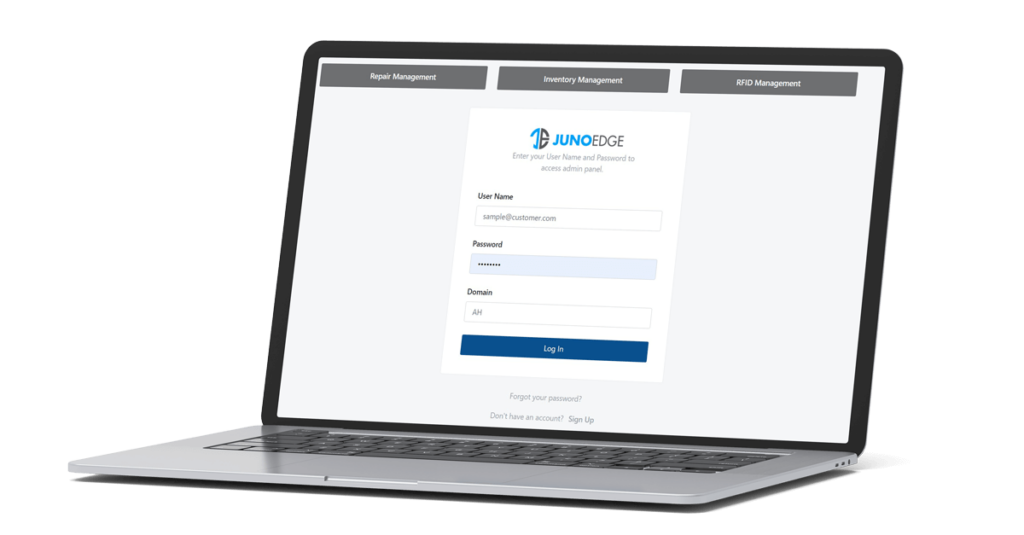
- JunoEdge. Web-based, client-accessible platform; search by part, serial number, or status.
- CoreLink. Repairable and cores inventory management.
- Warranty module. Tracked by type and timeline (OEM, integrator, repair supplier), with automatic alerts.
- Virtual warehouse. Virtual and physical spares shared across plants.
- BOM data scrub. Initial inventory reduction by identifying repairable spares.

Put repair first in your storeroom.
Talk to our team about a Repair-First approach for your cribs and storerooms.